| | 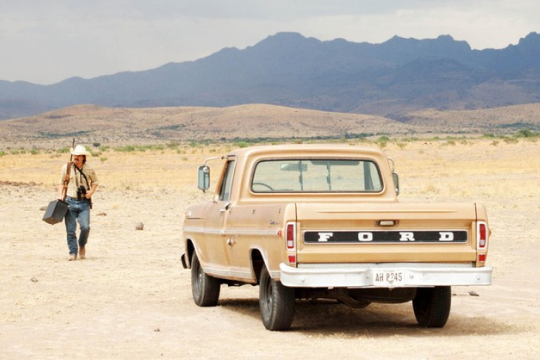 | | With apologies to the Coen brothers, how come there are no compact cars for old men (or women) these days? We explain below. | Richard Foreman Photography | | | The Week in Markets | | A little premature for a postwar rally? | | “For markets,” Bloomberg Opinion’s John Authers declared last week, “this war might as well be over.” How else should we interpret the S&P zooming back up 11% since March 30 — that’s over 11 days of trading, folks — and the TSX rebounding 7%? Both indexes are back in ATH terrain. The S&P has only had 21 surges of 10%+ over 10 days since 1950, which puts this stretch in the top 0.3% of the last 75+ years. If you scan the list, nearly all the surges followed a deep bear market or a global crisis: October 2002, March 2009, post-COVID, etc. But here’s the thing: the war’s not necessarily over. We’re in the fragilest of ceasefires. And even if it holds, economic normalcy in the Persian Gulf, and by extension the wider world, remains months away. It’s hard to escape the worry that this reversal has gotten way ahead of itself. Then again, it probably felt that way the other 20 times, too. | | | | S&P 500: |
+4.8% (+3.9% YTD)
| | | | The Chart of the Week | 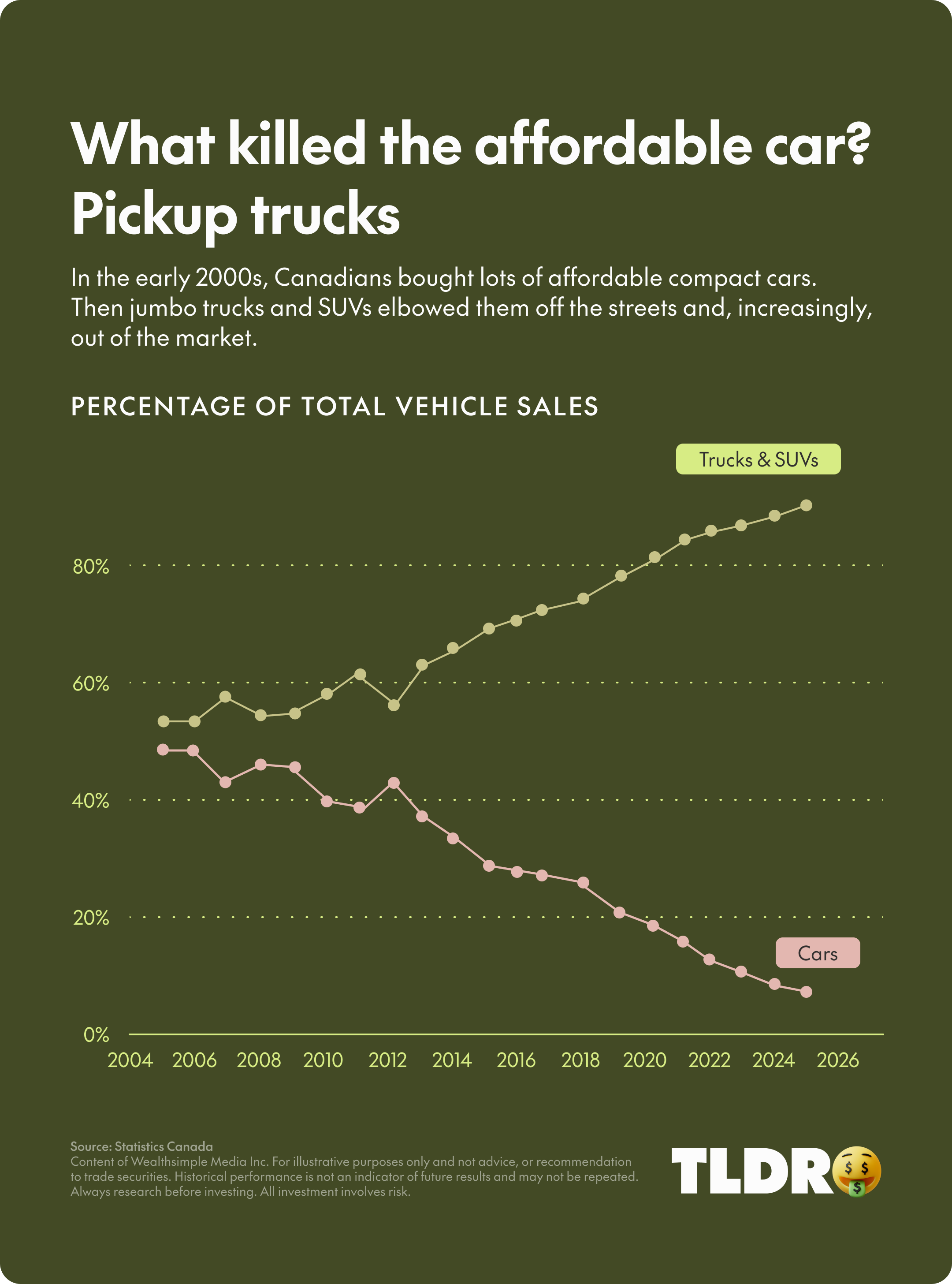 | | |
Carney to Canada: Thanks for the majority — here’s a tax cut. OK, tax pause. Fresh off clinching a narrow majority for the Liberals with a pair of special-election victories, PM Mark Carney sent voters a thank-you note in the form of a five-month pause on the federal excise tax on gas and diesel, beginning April 20. With gas prices soaring from the Iran war, the holiday will shave off about 10 cents per litre for drivers. Conservatives don’t think the pause goes far enough, progressives hate it for all the reasons you’d expect — and everyone else will gladly pocket the cash, which is why it was such a political layup. | |
The NDP wants to ban “surveillance pricing.” Great! What is it? Newly minted NDP leader Avi Lewis has a big item on his checklist: nipping in the bud a malevolent little practice called “surveillance pricing,” in which a company exploits your personal data (search history, usage patterns, device preference) to charge you more than the next sucker for the same exact product. Googled “baby fever” at 2 a.m.? Congrats, your thermometer just got pricier. It’s not really a thing in Canada yet, though the U.S. FTC did investigate Mastercard, JPMorgan Chase, and Accenture for it back in 2024. A fresh Abacus poll says 52% of Canadians want it gone before it ever shows up. | |
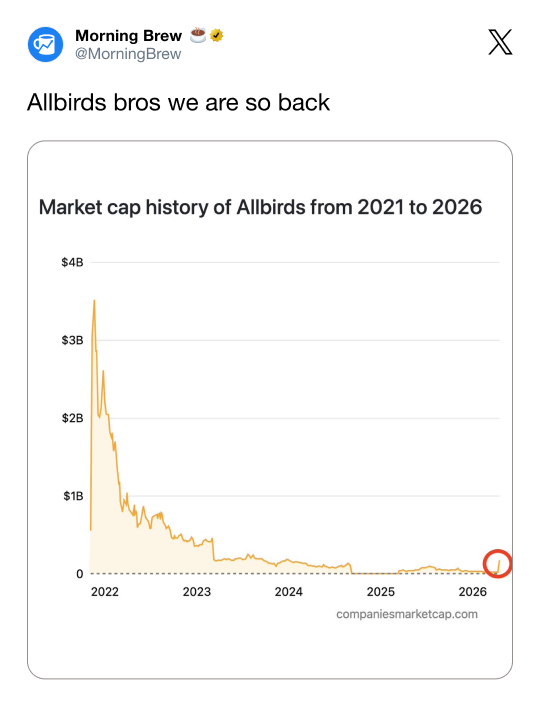
Allbirds, 2019’s favourite sneaker company, is now (what else?) an AI company. Who knew you could pivot so hard in those things! After a brutal post-IPO face-plant that took the company from a peak market cap of US$4.1 billion to US$21.7 million, the erstwhile wool-sneaker brand for the Silicon Valley elite is getting out of the sneaker business entirely — it sold off the shoe stuff two weeks ago for US$39 million — and will be rebranding the leftover public shell as “NewBird AI,” using $50 million in fresh financing to buy GPUs to provide AI compute. Ridiculous, right? To be clear, “NewBird AI” has no product yet. It’s barely a company. The day of the announcement, Allbirds’ stock soared by 645%. |  |
How Ford trucks flattened the affordable car. The New York Times published a smart essay last week about the death of the affordable car. The chief culprit: growing wealth. As North American drivers made more money, their tastes shifted from cramped economy models like the Honda Civic to roomier, pricier lines like Ford’s F-series trucks (average price: ~$73,000), which is currently Canada’s bestseller in any category. And automakers, for their part, discovered they much preferred the fatter profit margins. All of which explains our chart above.
—Abigail Covington
|  | | The FOMO Index | | by Stacey Woods | | Important | | 🤖 | Meta creating a 3D Mark Zuckerberg AI to interact with employees. “Wait, what have we been interacting with this whole time?” ask employees.
Source | | | | 🥩 | Study finds ultra-processed foods make human thighs look like well-marbled steaks. Experts say the best cuts for dry aging are cake-fed and chip-finished.
Source | | | |  | |  |
| 📚 | Spotify to start selling actual books. Actual bookstores shaking their heads, can’t figure out what they did that was so wrong.
Source | | | | 🏙️ | Toronto finally approves colour-coded signs for apartment ratings. It took a while to differentiate the subtle difference between mouse brown and cockroach brown.
Source | | | | | | Crash & Burn | |  | | To the Moon | | | 📼 | New video game simulates working in a ’90s video store. You can pretend you’re working toward a future where you don’t fantasize about dead-end jobs.
Source | | | | 🍪 | Independent audit finds rejecting cookies doesn’t always reject cookies. Internal review finds life completely unaffected by accepting cookies.
Source | | | | |  | |  | | 🦖 | University of Calgary sets record for largest gathering of people dressed as dinosaurs. Easier than largest gathering of people dressed as employed graduates.
Source | | | | 🖼️ | Man wins Picasso painting in a raffle. Next he’s going to try for the Venus de Milo in the bean bag toss.
Source | | | | | | | Who Cares? | | | The Big Important Story | | The Future Is Hardware! These Four Gadgets Prove It | Over the past few decades, software has made possible all sorts of tiny everyday miracles — from hailing rides to Slacking colleagues scattered hither and yon across the globe. What the past several decades haven’t brought are tons of radical innovations in hardware. We still drive cars, use refrigerators, and live in houses that would be familiar to our great-grandparents. And that’s too bad, since hardware can reshape daily life and lift productivity in ways that software just can’t. Spotify and Instagram, nifty as they are, haven’t changed your life nearly as much as the steam engine or electricity affected past generations.
That’s not to say there have been no hardware breakthroughs — Starlink, Neuralink, and the iPhone are all astonishing. Here are four other newer, less-publicized examples that aim to make hardware revolutionary again.
Sanctuary AI’s Phoenix robot
As a rule, humanoid robots are still basically sci-fi parlour tricks, not practical workers. One exception: Phoenix, by Vancouver-based Sanctuary AI. Thanks in large part to its freaky humanlike hands, the company says that during a weeklong pilot at a B.C. store, Phoenix completed 110 retail tasks, including packing, tagging, and labelling. A lot of researchers believe that as the world’s population ages and shrinks, we’ll need many such robots to harvest crops, stock warehouses, run factories, and perform myriad other labour-intensive tasks. | | 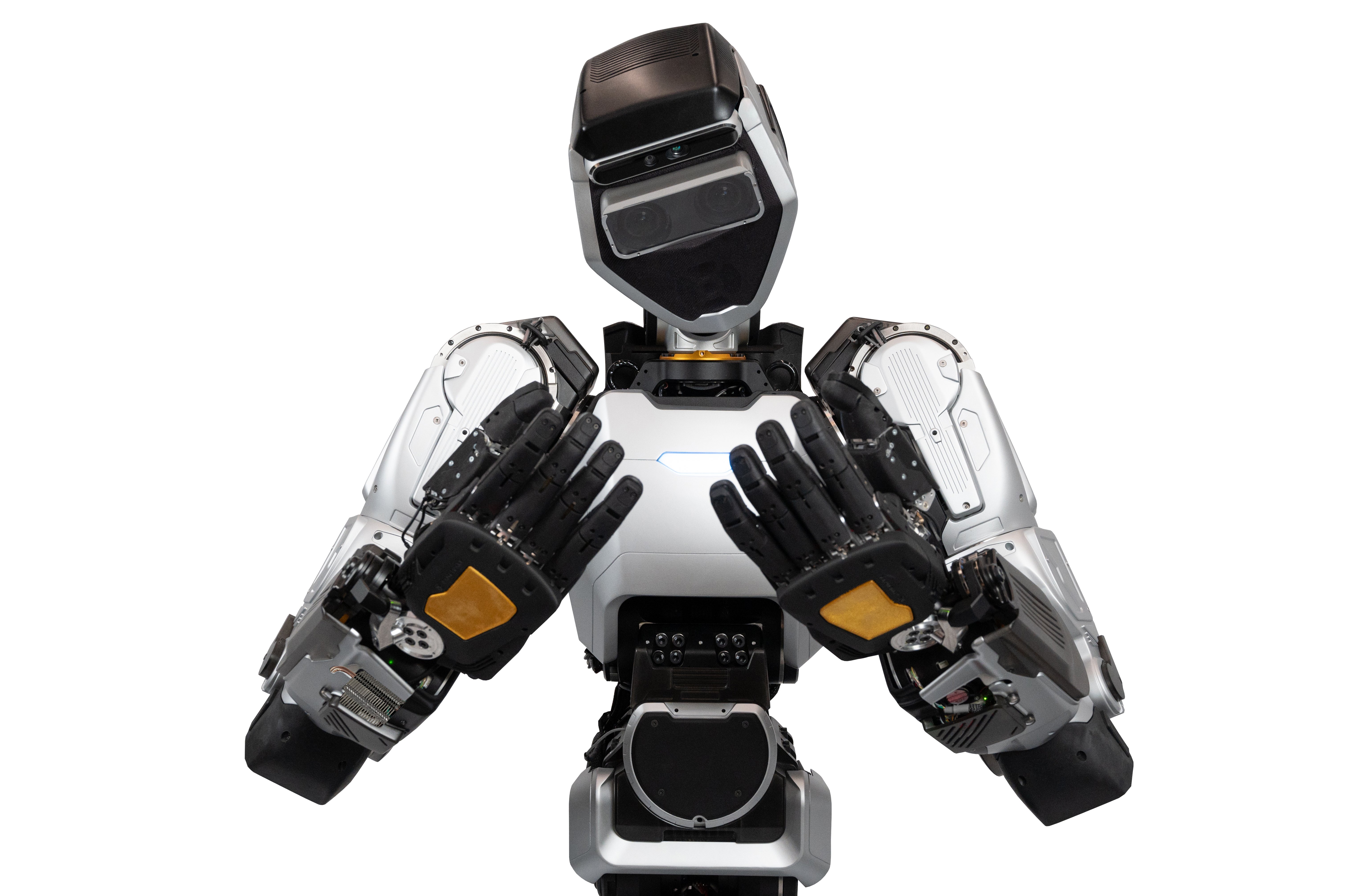 |
Cache Energy’s concrete battery
Heating is one of the world’s most intractable power problems: about 20% of global energy goes to industrial heat and another 10% to heating homes and water. To reduce demand, Cache Energy cribbed an idea from the Romans: its system converts electricity into heat whenever energy is abundant (like at night) and stores it in the chemical bonds of cement pellets stashed in grain silos. Whenever energy demand spikes, the system adds water to the pellets to create a chemical reaction that releases heat for warming homes and buildings.
Epic Cleantec OneWater
This giant system is the size of a building and captures wastewater — toilet water, rainwater, HVAC condensate — then treats it on-site and recirculates up to 95% for toilets, laundry, irrigation, and other non-potable-water uses. The process saves buildings thousands in utility and sewer fees annually and boosts water-conservation efforts. Salesforce Tower’s OneWater system alone processes 114,000 litres per workday.
Archer’s Midnight air taxi
Midnight is a four-passenger electric air taxi that wants to turn time-sucking trips around town — grim airport runs, bottlenecked commutes — into Jetsons-like five- to 15-minute flights. Which the Midnight can do since it travels at speeds up to 241.4 km/h, needs only 10 minutes to recharge, and purports to be 100 times quieter than a helicopter. The San Jose-based company is working on regulatory approval so it can begin flights out of airports in the greater Miami region later this year.
—Abigail Covington
| | The Big Read | | 🪿The Fanfare Around the Band Geese Actually Was a Psyop | |
The Brooklyn indie band is real, to be clear, but, according to a pair of reports in WIRED and AV Club, their meteoric rise was powered — to a very debatable degree — by viral-marketing firm Chaotic Good, whose ethos toward creating a sock-puppet fan base is that “everything on the internet is fake.” On the flip side: we’re shocked, shocked to hear bands do marketing. | WIRED
| | | The Wisdom of X | |
 | | Thoughts on Today’s Issue? | | | | | This week’s newsletter contributors: Brennan Doherty (writer), Devin Gordon (writer), Stacey Woods (writer), Ambrose Martos (fact checker), Ciara Rickard (copy editor), Maude Campbell (copy editor), Sara Black McCulloch (fact checker), Eva Grace Clement Cruz (specialist, product engagement), Lauren Edwards (production coordinator), Matthew Karasz (markets editor), Jared Sullivan (senior editor), Peter Martin (senior editor), and Devin Friedman (editor-in-chief).
Phoenix photo courtesy of Sanctuary AI.
TWIM: Total returns shown in local currency, via TradingView. | | | |